
Dental implants are the closest thing to getting your natural tooth back. A titanium post replaces the missing root, and we crown it with porcelain that looks and works exactly like a real tooth.
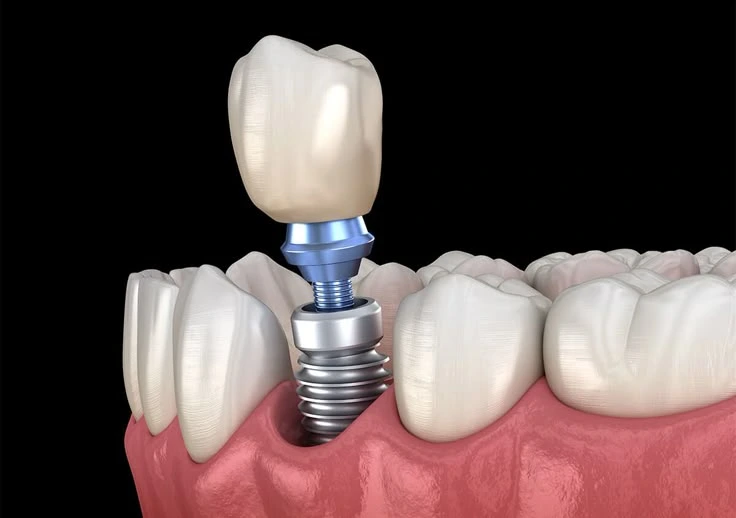
A dental implant is a titanium screw we place surgically into your jawbone where a tooth root used to be. Over the next 3-6 months, something remarkable happens. The implant fuses with your bone through a process called osseointegration. It literally becomes part of your jaw.
Once that’s happened, we attach a connector piece (called an abutment) to the implant, then crown it with porcelain matched perfectly to your natural teeth. The result is a replacement tooth that looks, feels, and functions exactly like the real thing.
Here’s what makes implants different from dentures or bridges. They’re independent structures supported entirely by your own jawbone, just like natural tooth roots. Dentures rest on your gums. Bridges rely on adjacent teeth for support. Implants stand alone.
Most Canterbury patients tell us they can’t tell the difference between their implant and natural teeth at our London Road practice. Neither can anyone else.
The beauty of implant dentistry is its versatility. We can replace one tooth or rebuild an entire smile, depending on what you need.
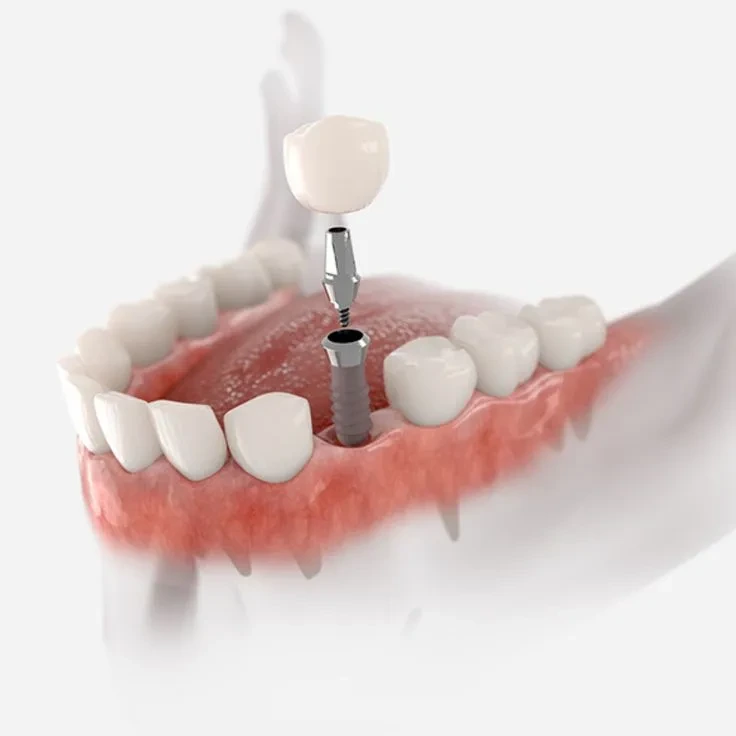
You're missing one tooth, and we replace it with one implant and one crown. One titanium implant placed where your tooth root was, topped with a custom porcelain crown.
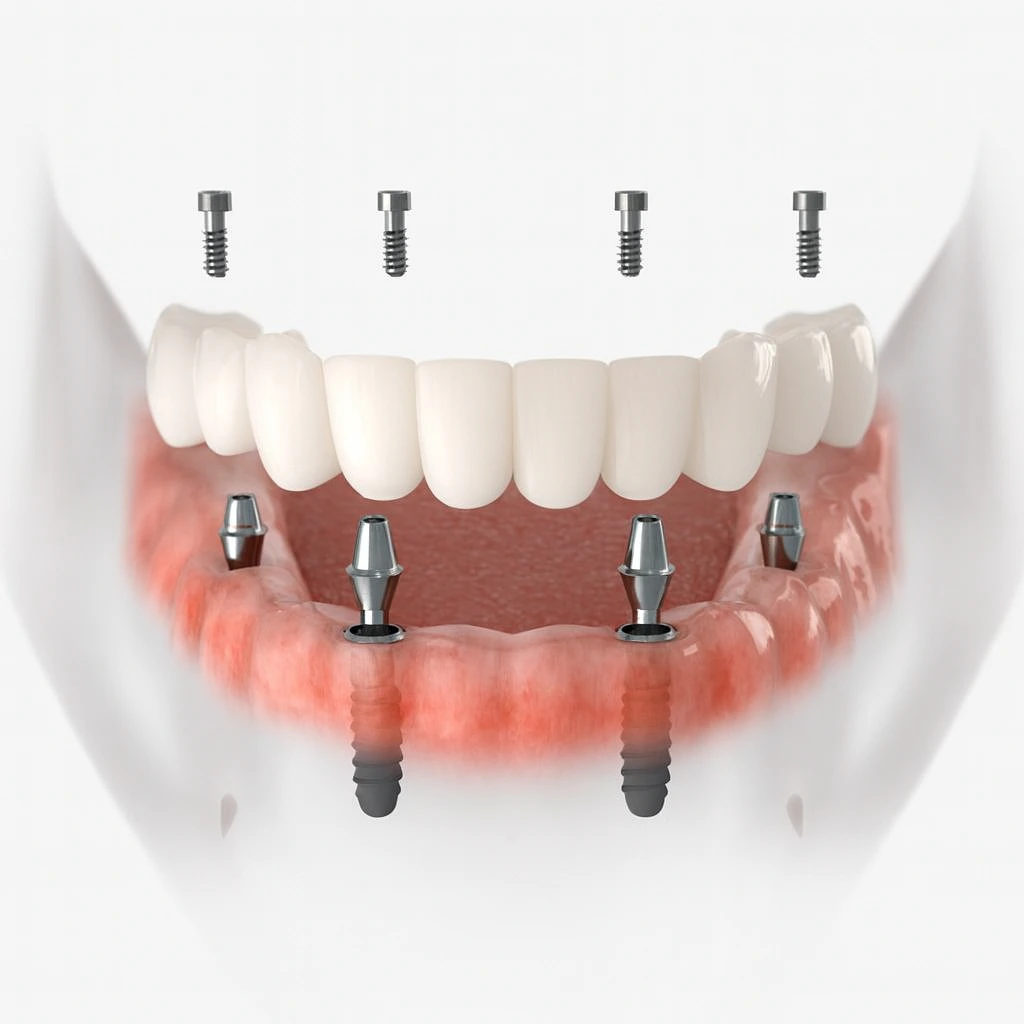
When you're missing several teeth in the same area, we don't necessarily need one implant per missing tooth.
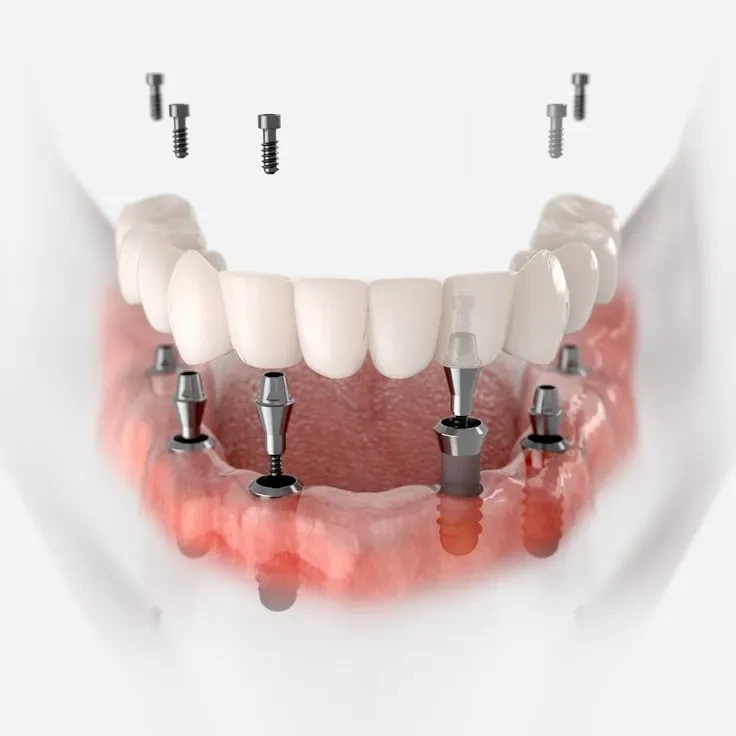
This is a life-changing treatment for people missing all or most teeth in an upper or lower arch. We use four to six strategically placed implants to support a complete arch of fixed teeth.
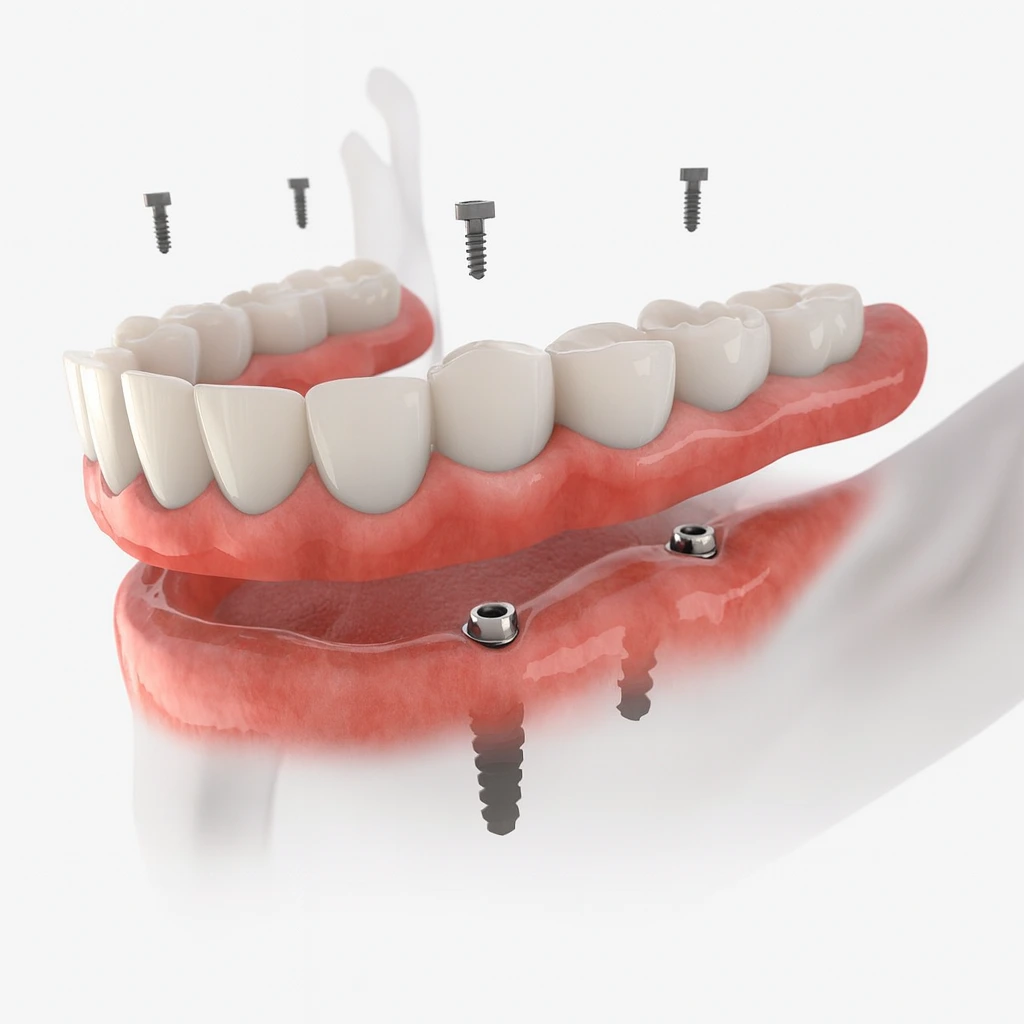
If full arch implants stretch your budget, this middle-ground option uses 2-4 implants to secure a denture firmly in place. The denture clips onto the implants but you remove it for cleaning at night.
Over the years, we’ve seen how profoundly missing teeth affect people’s lives. It goes far beyond aesthetics.
If you’re nodding along to any of this, implants might genuinely change your quality of life.
We examine your mouth thoroughly and take X-rays or 3D scans to assess your jawbone. Not everyone’s a suitable implant candidate, so this assessment matters.
We’ll be straight with you about whether implants will work for your situation. We need adequate bone density and healthy gums. If you don’t have enough bone, we can discuss bone grafting, but that adds time and cost.
During this appointment, you’ll learn whether you have sufficient bone (or need grafting first), how many implants you need and which type of restoration suits you, what the entire process involves, realistic timeline from start to finish, and complete costs with nothing hidden.
You’ll get a detailed written treatment plan to review at home. Take your time deciding. This is a significant investment, and you need to feel completely comfortable before proceeding.
Under local anaesthetic (you’re awake but completely numb), we make a small incision in your gum, create precise space in the bone, and place the titanium implant exactly where your tooth root was. We stitch the gum closed over or around the implant, depending on the technique. A temporary tooth (usually a removable partial denture or temporary bridge) fills the gap cosmetically whilst healing happens.
For single implants, surgery typically takes 60-90 minutes. Multiple implants take proportionally longer.
What to expect after surgery: Mild to moderate discomfort for 3-5 days is normal. Most patients manage fine with over-the-counter painkillers. Some swelling and bruising peaks around day 2-3, then resolves within a week. Stick to soft foods for 7-10 days and avoid strenuous activity for 48 hours.
The vast majority of patients return to work within 1-2 days.
This waiting period allows osseointegration, where the implant fuses with your jawbone. You won’t feel anything happening. It’s a biological process occurring silently whilst you get on with life.
We monitor healing with check-up appointments. Once X-rays confirm the implant has integrated fully (typically 3-4 months for lower jaw, 4-6 months for upper jaw), we move to the next stage.
Waiting feels frustrating, but rushing this stage risks implant failure. The fusion needs to happen properly for long-term success.
Appointment 1 (30-45 minutes): We expose the implant through a tiny incision (or it’s already exposed, depending on technique), attach an abutment (the connector post), and take impressions for your custom crown. Gums heal around the abutment for 1-2 weeks.
Appointment 2 (30-45 minutes): Your custom porcelain crown arrives from the laboratory. We attach it permanently to the abutment, check your bite carefully, and you’re done. You leave with your completed tooth.
With proper care (brushing twice daily, flossing, attending six-monthly check-ups), implants routinely last 20+ years. Many patients never need the implant itself replaced. The crown on top might need replacing after 15-20 years from normal wear, just like crowns on natural teeth eventually need replacement.
Single dental implant (including implant placement, abutment, and crown): £[price range]
What’s included: Free consultation with X-rays/scans, implant surgery with local anaesthetic, titanium implant post, healing abutment, custom porcelain crown, and all follow-up appointments.
Multiple implants: Each additional implant costs the same per tooth. If you need bone grafting before implant placement, this adds approximately £[amount] per area.
Full arch implants (All-on-4/All-on-6): £[price range] per arch. This includes all implants, custom-made prosthesis, and temporary teeth if appropriate.
Implant-retained dentures: £[price range] depending on how many implants (typically 2-4 per arch).
Interest-free payment plans available over 12-24 months to spread the investment. Many patients find paying £[monthly amount] per month manageable compared to saving the full amount upfront.
Thinking about long-term value: Dentures cost around £[denture price] but need replacing every 5-7 years throughout your lifetime. Over 20-30 years, that’s £[total] or more. Implants cost more initially but often work out more economical over decades because you’re not repeatedly replacing them.
Call 01227 765 851 for an exact quote based on your specific situation.
We take the time to understand your medical history, assess your dental health, and create a treatment plan that works for your budget and timeline. Your smile is your story, and every story deserves individual attention.
Dr Banvir's MSc in Aesthetic & Restorative Dentistry represents specialist-level training you'd typically need referrals to access. His three years working in Maxillo-Facial Surgery means he's handled complex cases most general dentists never see. He completed his Certificate in Implants in 2012 and has placed hundreds since.
Digital X-rays with minimal radiation. Intraoral cameras so you can see exactly what we're seeing. Comprehensive record-keeping that tracks changes over time. We invest in technology because it genuinely improves your experience and treatment outcomes.
Generations of Canterbury families have trusted us with their dental health. That kind of loyalty doesn't come from flashy marketing. It comes from delivering quality care consistently over decades.
Dental anxiety is far more common than you think. We work at your pace, explain everything before we begin, and create an environment where you feel in control. Many of our most nervous patients now attend regular check-ups without that familiar dread.
Looking for a dentist you can actually stick with?
Registering with A1 Dental means your care is planned properly, explained clearly, and delivered consistently over years. Not patched together across disconnected appointments at different practices.
Your first visit focuses on understanding your story. We assess your dental health, discuss your goals and concerns, and map out a realistic treatment plan that respects both your timeline and budget.
What registration means:
The surgery itself isn't painful because we numb the area completely with local anaesthetic. You'll feel pressure and hear drilling, but no actual pain during the procedure itself.
After the anaesthetic wears off, expect mild to moderate discomfort for 3-5 days, similar to having a tooth extracted. Most patients manage absolutely fine with over-the-counter painkillers like ibuprofen and paracetamol together.
Severe pain isn't normal. If you experience it, contact us immediately on 01227 765 851 because it may indicate a problem.
With proper care (brushing twice daily, flossing, attending regular check-ups), dental implants routinely last 20+ years. Research studies show 10-year success rates exceeding 95%.
Many patients never need the implant itself replaced. The crown on top might need replacing after 15-20 years from normal wear, but the implant integrated in your bone can genuinely last a lifetime.
Longevity depends on maintaining good oral hygiene, not smoking, and attending regular maintenance appointments so we can catch any problems early.
Absolutely not. We've successfully placed implants in Canterbury patients in their 70s and 80s. Age isn't a barrier if you're in reasonable general health and your jawbone quality is adequate.
Older patients heal slightly slower than younger ones, but they achieve identical long-term results. The main factors determining suitability are bone density, gum health, and overall health status, not the number on your birth certificate.
A single dental implant including surgery, implant post, abutment, and custom crown costs £[price range] at A1 Dental Surgery. Multiple implants cost the same per tooth.
Full arch implants (All-on-4 or All-on-6) cost £[price range] per arch. If you need bone grafting, this adds approximately £[amount] per area.
We offer interest-free payment plans over 12-24 months. During your free consultation, we'll provide exact pricing for your specific situation.
Call 01227 765 851 to discuss costs.
Dental implants have approximately 95-98% success rates in healthy patients. Success depends on adequate bone density, good oral hygiene, not smoking, and following aftercare instructions properly.
Implants occasionally fail to integrate with bone (usually within the first few months if it's going to happen), which requires removing them and replacing once healing completes. Dr Banvir's success rates match these industry standards. Failures are genuinely rare when patients are selected properly and treatment is executed correctly.
Smoking significantly reduces implant success rates because it impairs blood flow and healing. We still place implants in smokers, but your risk of failure is approximately double that of non-smokers.
If you can quit smoking (at least for the healing period of 3-6 months), your chances of success improve dramatically. We'll discuss this honestly during your consultation and help you make an informed decision about proceeding.
From consultation to final crown placement, most single implant cases take 6-9 months. This includes 3-6 months healing time for the implant to fuse with bone, which can't be rushed.
If you need bone grafting first, add another 4-6 months for that healing before implant placement. Multiple implants follow similar timelines. Full arch cases can sometimes provide temporary teeth on the same day as implant surgery, with permanent teeth fitted after 3-6 months healing.
Insufficient bone doesn't automatically rule out implants. We can perform bone grafting procedures to build up the jawbone before or during implant placement. This adds time and cost (approximately £[amount] per area), but makes implants possible in many cases where they wouldn't otherwise work.
During your consultation, we'll assess your bone with X-rays or 3D scans and explain whether grafting is needed, what it involves, and how it affects your treatment timeline.
Yes, once everything's healed and your crown is fitted, you can eat absolutely anything. Implants handle the same biting forces as natural teeth. Steak, apples, nuts, crusty bread, corn on the cob. Everything becomes possible again.
During the healing period, you'll need to stick to soft foods and avoid chewing on the implant site, but this is temporary. Once your final crown is fitted, normal eating resumes.
Not necessarily. For multiple missing teeth, we can use two or three implants to support a bridge replacing three, four, or even five teeth. For full arch replacement, we only need four to six implants to support a complete set of teeth.
During your consultation at our Canterbury practice, we'll assess your specific situation and explain the most cost-effective approach for replacing your missing teeth, whether that's individual implants, implant-supported bridges, or full arch solutions.
Our practice is centrally located on London Road in Canterbury (near Canterbury East Station with on-site parking), making regular appointments convenient throughout your implant journey, whether you're local or travelling from Deal, Dover, or Ramsgate.