
Root canal treatment saves infected or dying teeth that would otherwise need extracting. We remove the infected nerve tissue inside your tooth, clean and seal the root canals, then restore the tooth with a filling or crown. It stops the pain and lets you keep your natural tooth.
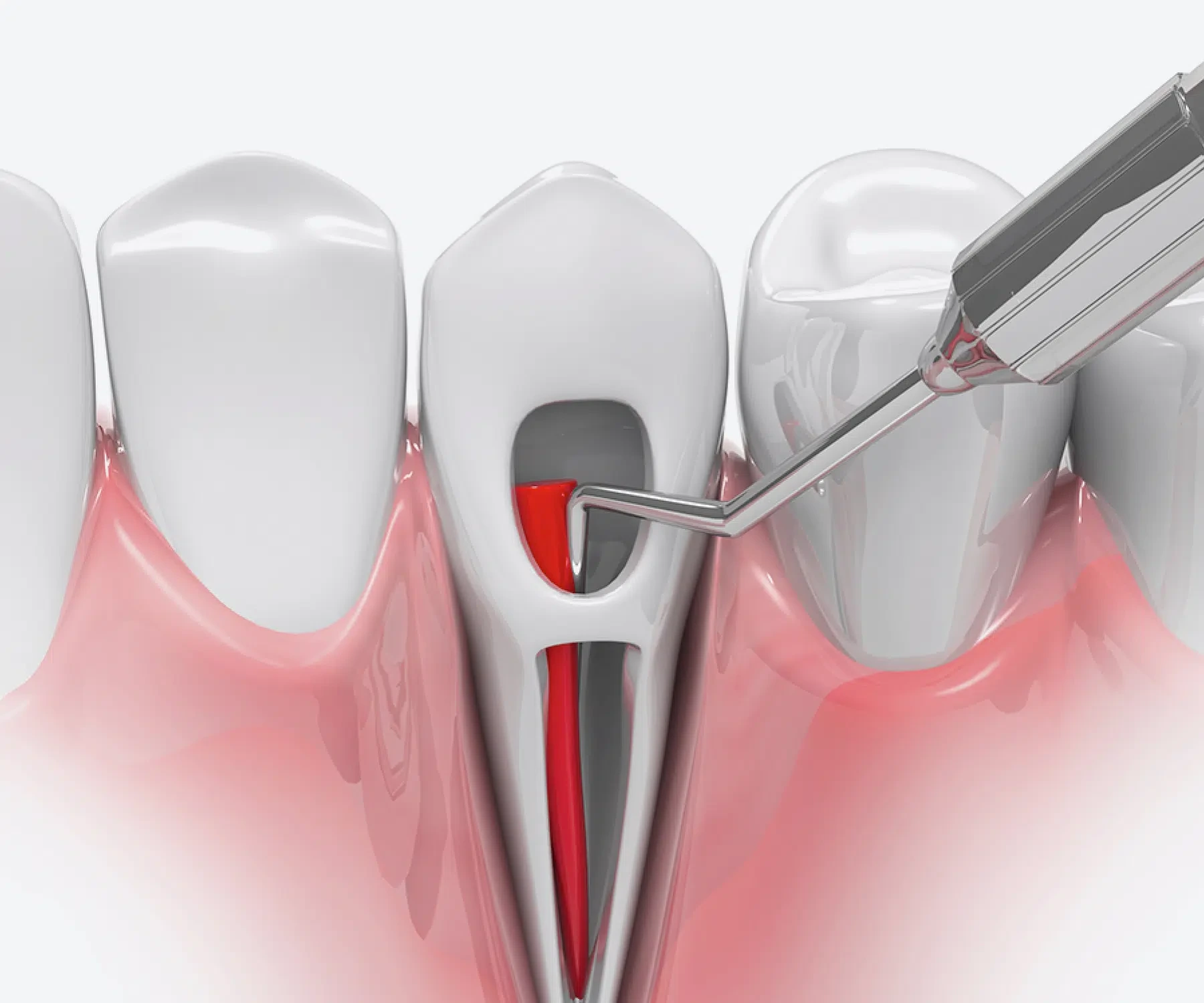
Root canal treatment (also called endodontics) removes infected or dead nerve tissue from inside your tooth. Each tooth contains one to four narrow canals running from the crown down to the root tips. These canals house the tooth’s nerve and blood supply (the pulp).
When bacteria reach the pulp through deep decay, cracks, or trauma, the nerve becomes infected. This causes severe toothache, sensitivity, or abscesses. Left untreated, the infection spreads through the root canals into the bone around your tooth root, creating an abscess.
Root canal treatment involves removing all infected pulp tissue from the canals, cleaning and disinfecting the canals thoroughly, sealing them with a rubber-like material to prevent reinfection, and restoring the tooth with a filling or crown.
The tooth remains in your mouth, fully functional for chewing. It just no longer has living nerve tissue inside it. Teeth without nerves function perfectly well for decades at our Canterbury practice on London Road.
We see patients in genuine agony from infected teeth regularly. Root canal treatment solves several serious problems.
You have severe, persistent toothache: The tooth throbs constantly or pain wakes you at night. Painkillers barely touch it. Hot or cold triggers excruciating pain. This is classic infected nerve tissue. Root canal treatment removes the infection and stops the pain permanently.
You have a dental abscess: Swelling in your gum near a tooth, sometimes with pus drainage or a bad taste. Your face might swell. You feel generally unwell with fever. The tooth is severely infected. Root canal treatment cleans out the infection and allows healing.
Your tooth is dying after trauma: You knocked your tooth hard months or years ago. Now it’s turning grey and sensitive. Trauma damages the blood supply and the nerve is dying. Root canal treatment removes the dead tissue before infection sets in.
You have extreme sensitivity: The tooth reacts violently to hot or cold, and the pain lingers for minutes rather than seconds. This suggests nerve inflammation that won’t resolve on its own. Root canal treatment removes the inflamed nerve tissue.
You want to avoid extraction: Your tooth is badly infected and extraction seems inevitable. But you’d prefer keeping your natural tooth if possible. Root canal treatment often saves teeth that would otherwise need removing, avoiding gaps and the need for implants or bridges.
You have a cracked tooth causing pain: Cracks can expose nerve tissue to bacteria. If the crack extends into the pulp but not down the root, root canal treatment can save the tooth when paired with a crown to hold it together.
The alternative to root canal treatment is extraction. If you want to keep your tooth, root canal treatment is usually the only option once infection has reached the nerve.
When you come in with a toothache or sensitivity, we examine the tooth thoroughly and take X-rays to see the root canals and any infection in the surrounding bone. This confirms whether root canal treatment is needed and helps us plan the procedure. We’ll explain exactly what’s involved, how many appointments you’ll need (usually 1-2), and what to expect during recovery. You’ll receive clear pricing with no surprises.
We start with local anaesthetic to numb the tooth completely. Many patients worry this won’t work when teeth are severely infected, but modern anaesthetic techniques are very effective. We’ll make sure you’re completely comfortable before starting.
We create a small opening in the top of your tooth to access the pulp chamber and canals. For front teeth, this opening is on the back surface. For back teeth, it’s on the chewing surface.
Using fine instruments, we carefully remove all infected or dead pulp tissue from each canal. Teeth have 1-4 canals depending on which tooth it is. We measure each canal’s length precisely using electronic equipment and X-rays.
We clean the canals thoroughly with antibacterial solutions and shape them with progressive series of fine files. This process removes bacteria and prepares the canals for filling. It’s meticulous work taking 30-60 minutes depending on how many canals exist.
Once the canals are completely clean, we seal them with a rubber-like material called gutta-percha. This prevents bacteria reentering. We take X-rays to verify the filling reaches the root tip correctly.
We seal the access opening with either a temporary filling (if you need a crown later) or permanent filling (if the tooth has enough structure remaining). Many root canal treated teeth need crowns for protection.
You’ll feel pressure during the appointment but shouldn’t feel pain. If you do, tell us immediately and we’ll add more anaesthetic.
The tooth will feel tender for 3-7 days as inflammation settles. This is normal. Over-the-counter painkillers manage discomfort well. The tooth might feel slightly different when biting for a few days.
Contact us on 01227 765 851 if you experience severe worsening pain not controlled by painkillers, visible swelling in your gum or face, the temporary filling falling out, or feeling generally unwell with fever. These are rare but need addressing promptly if they occur.
Many root canal treated teeth need crowns for protection. Teeth without nerve tissue become brittle over time and can fracture under chewing forces. Crowns prevent this.
If a crown is recommended, we’ll schedule this 1-2 weeks after root canal treatment once the tooth has settled. The crown process involves two appointments over 2-3 weeks (or single appointment if we use CEREC same-day crowns).
NHS root canal treatment: If you’re eligible for NHS treatment, root canal treatment is covered under Band 2 (£73.50). This includes the root canal procedure itself plus a permanent filling. If you subsequently need a crown, this falls under Band 3 (£319.10) but only if it’s not within the same course of treatment as the root canal.
Private root canal treatment:
Front tooth (single canal): £[price]
Premolar tooth (1-2 canals): £[price]
Molar tooth (3-4 canals): £[price]
What’s included: Consultation and diagnosis, X-rays needed for treatment, local anaesthetic, root canal procedure (cleaning and filling all canals), temporary or permanent filling, and follow-up appointment if needed.
Crown costs (if needed):
NHS crown: £319.10 (Band 3)
Private crown: £[price range]
CEREC same-day crown: £[price]
Private treatment typically allows more time per appointment and uses premium materials. Some complex cases benefit from the additional time private appointments provide.
Payment plans available for private treatment if spreading costs over several months makes treatment more accessible.
Call 01227 765 851 for exact pricing and to discuss NHS eligibility.
We take the time to understand your medical history, assess your dental health, and create a treatment plan that works for your budget and timeline. Your smile is your story, and every story deserves individual attention.
Dr Banvir's MSc in Aesthetic & Restorative Dentistry represents specialist-level training you'd typically need referrals to access. His three years working in Maxillo-Facial Surgery means he's handled complex cases most general dentists never see. That surgical background provides confidence handling difficult root canal cases.
Digital X-rays with minimal radiation. Intraoral cameras so you can see exactly what we're seeing. Comprehensive record-keeping that tracks changes over time. We invest in technology because it genuinely improves your experience and treatment outcomes.
Generations of Canterbury families have trusted us with their dental health. That kind of loyalty doesn't come from flashy marketing. It comes from delivering quality care consistently over decades.
Dental anxiety is far more common than you think. We work at your pace, explain everything before we begin, and create an environment where you feel in control. Many of our most nervous patients now attend regular check-ups without that familiar dread.
Looking for a dentist you can actually stick with?
Registering with A1 Dental means your care is planned properly, explained clearly, and delivered consistently over years. Not patched together across disconnected appointments at different practices.
Your first visit focuses on understanding your story. We assess your dental health, discuss your goals and concerns, and map out a realistic treatment plan that respects both your timeline and budget.
What registration means:
No, not with modern anaesthetics. The infected tooth causing you pain is agonising. Root canal treatment stops that pain by removing the infection.
During the actual procedure, you'll feel pressure and vibration but shouldn't feel pain because we numb the tooth completely. If you do feel pain, tell us immediately and we'll add more anaesthetic.
After treatment, mild tenderness for 3-7 days is normal as inflammation settles. This is manageable with over-the-counter painkillers. Most patients tell us they wish they'd had treatment sooner rather than enduring weeks of severe toothache.
Most root canal treatments take 60-90 minutes for the actual procedure. Front teeth with single canals are quicker (60 minutes). Back molars with 3-4 canals take longer (90 minutes or more). Complex cases with curved canals or calcification can take 2 hours.
Simple cases might finish in one appointment. Complex cases occasionally need two appointments if there's severe infection requiring medication between visits. We'll give you a realistic time estimate once we've assessed your specific tooth.
Probably, especially for back teeth. Teeth become more brittle after root canal treatment because they no longer have moisture from living pulp tissue. Back teeth handling heavy chewing forces are prone to fracturing without crown protection.
Front teeth sometimes survive with just a filling if enough natural tooth structure remains. During your appointment, we'll assess how much tooth structure remains and recommend a crown if fracture risk is significant. Crowning root canal treated teeth significantly improves long-term survival rates.
The infection worsens and spreads. Severe dental abscesses can become serious medical emergencies if bacteria enter your bloodstream. Bone around your tooth root is destroyed progressively.
Eventually the tooth dies completely and likely needs extracting anyway, except by that point the infection has caused additional bone loss making future implant placement more difficult and expensive. Delaying root canal treatment when it's needed rarely works out well. The tooth won't heal on its own once the nerve is infected.
NHS root canal treatment costs £73.50 (Band 2) if you're eligible for NHS care. This includes the procedure and filling. If you subsequently need a crown, that's Band 3 (£319.10).
Private root canal treatment costs £[price range] depending on which tooth it is (front teeth cheaper than molars due to fewer canals). Private crowns cost £[price range] additionally.
Private treatment typically allows more appointment time and uses premium materials.
Call 01227 765 851 to discuss NHS eligibility and exact pricing for your situation.
Yes, though success rates are high (around 85-95%). Failure usually occurs if bacteria remain in complex canal systems, new infection develops, or the tooth fractures. If root canal treatment fails, options include retreatment by a specialist endodontist or extraction.
The best way to prevent failure is proper initial treatment (cleaning all canals thoroughly) and protecting the tooth with a crown afterwards. We'll discuss your specific situation and success probability during consultation.
With proper care and crown protection, root canal treated teeth commonly last 20-30+ years. Some last a lifetime. Success depends on thorough initial cleaning, protecting the tooth with a crown, maintaining good oral hygiene, and attending regular check-ups so we can monitor the tooth.
Root canal treated teeth aren't weaker than natural teeth structurally, they're just more brittle due to loss of moisture from living pulp tissue. Crowns protect against this brittleness.
Yes, root canal treatment uses local anaesthetic only. You'll be awake throughout and able to drive immediately after. Your mouth will be numb for 2-3 hours afterwards, so avoid eating until feeling returns to prevent accidentally biting your cheek or tongue.
If you're particularly anxious about the procedure, let us know during booking. We can discuss options to help you feel more comfortable.
Root canal treatment during pregnancy is generally safe. The infection poses more risk to you and your baby than the treatment itself. We use local anaesthetic considered safe during pregnancy and can take X-rays with proper lead apron protection.
The second trimester is the ideal time for dental treatment if it can wait. If you have a dental emergency during pregnancy, we'll treat it immediately regardless of trimester. We'll discuss your specific situation and any concerns during consultation.
Yes. Dental anxiety is far more common than you think. We work at your pace, explain everything before we begin, and create an environment where you feel in control.
Root canal treatment has an unfair reputation for being painful. Modern techniques and anaesthetics make it genuinely comfortable. We take whatever time is needed to ensure you're completely numb before starting.
If you're in severe pain from an infected tooth, call us immediately on 01227 765 851. We see dental emergencies same-day whenever possible. Our practice is centrally located on London Road in Canterbury (near Canterbury East Station with on-site parking), making emergency appointments accessible whether you're local or travelling from Deal, Dover, or Ramsgate.