
Dentures replace missing teeth with removable prosthetics that restore your smile, chewing ability, and confidence. Modern dentures look remarkably natural and fit comfortably when made properly. Whether you need a few teeth replaced or a complete set, we’ll create dentures tailored specifically to your mouth.
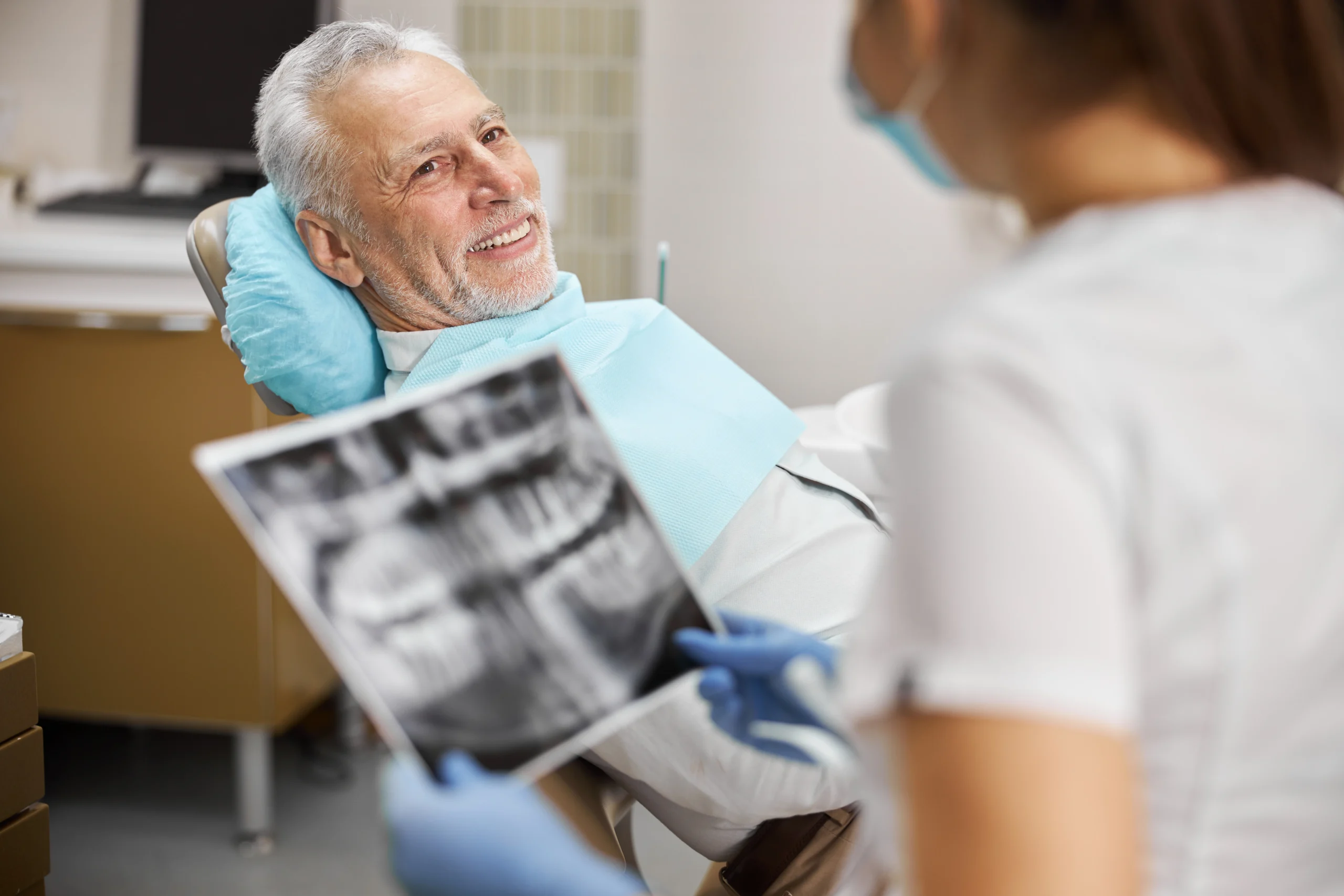
Dentures are removable replacements for missing teeth and surrounding gum tissue. They sit on top of your gums and are held in place by suction (upper dentures), your muscles and tongue position (lower dentures), or metal clasps that grip remaining natural teeth (partial dentures).
You remove dentures nightly for cleaning and to let your gum tissues rest. Most people soak them in a cleaning solution overnight, then put them back in each morning.
Modern dentures have come a long way from the obviously fake-looking sets your grandparents wore. Current materials and techniques at our Canterbury practice on London Road create dentures that look natural, fit comfortably, and function well for eating and speaking. When made properly, most people won’t realise you’re wearing them.
That said, dentures will never feel exactly like natural teeth. They move slightly when eating. They require adjustment periods. They need replacing every 5-7 years as your gums and bone change shape. But for many patients, particularly those on limited budgets or who can’t have implants, dentures provide excellent tooth replacement that genuinely improves quality of life.
Different types of dentures solve different problems. Understanding your options helps you make informed decisions about which suits your situation best.
A complete set of upper or lower teeth for patients missing all their natural teeth in that arch. An acrylic base coloured to look like gum tissue supports a full set of prosthetic teeth. Upper dentures cover your entire palate and are held in place by suction. Lower dentures sit on your gum ridge and are held by your tongue, cheek muscles, and saliva creating mild suction.
Best for patients missing all teeth in the upper or lower arch (or both). Upper dentures generally stay in place quite well due to the suction created against your palate. Lower dentures are notoriously trickier because there’s less surface area for suction and your tongue constantly moves them. Many people struggle with lower denture stability, which is why implant-retained dentures have become popular for lower arches specifically.
Expect 4-8 weeks to adjust fully. They’ll feel bulky and foreign initially. Speaking clearly takes practice. Eating soft foods only for the first few weeks is normal. Your mouth gradually adapts.
Removable dentures that replace some teeth whilst you keep your remaining natural teeth. A metal or acrylic framework holds prosthetic teeth. Metal clasps grip onto your remaining natural teeth, keeping the partial denture secure. You remove it nightly for cleaning.
Best for patients missing several teeth but who still have some strong natural teeth remaining. Partial dentures feel less bulky than full dentures because they don’t need to cover as much area. The metal clasps are sometimes visible when you smile widely, depending on which teeth they’re attached to. They’re more stable than full dentures because they anchor to natural teeth.
Clean both the denture and your natural teeth thoroughly. Food gets trapped under partials and around clasp teeth, increasing decay risk if hygiene is poor.
Dentures fitted on the same day your remaining teeth are extracted, so you’re never without teeth. We take impressions before extracting your teeth and have dentures made in advance. On extraction day, we remove your teeth and fit dentures immediately. You leave with teeth in your mouth rather than being toothless for weeks whilst gums heal.
Best for patients who can’t face being without teeth for even a day, often for work or social reasons.
Reality check: Immediate dentures never fit as well as conventional dentures made after your gums have healed. We’re essentially guessing what your gum shape will be once teeth are removed and swelling subsides. Expect multiple adjustments over the first few months and likely relines or remakes within 6-12 months as gums change dramatically during healing.
You avoid the psychological trauma of being toothless, but you pay extra for dentures that are essentially temporary and need significant adjustments or replacement relatively quickly.
Dentures that clip onto dental implants for dramatically improved stability. Two to four implants are placed in your jaw with special attachments. Your denture clips onto these attachments securely but you still remove it nightly for cleaning.
Best for people struggling with loose conventional dentures, particularly lower dentures which are notoriously unstable. Eliminates the slipping, clicking, and movement that makes conventional dentures frustrating. You can eat confidently without worrying about dentures shifting. More expensive than conventional dentures due to implant placement, but far more affordable than full arch implants with fixed teeth.
During your consultation, we’ll examine your mouth and discuss which denture type suits your specific situation, budget, and expectations.
We’ve fitted dentures for hundreds of Canterbury patients over the years. Here are the situations where dentures genuinely make sense.
Dentures aren’t as good as natural teeth or even as good as implants. They’re not. But they’re a legitimate, functional, affordable solution for many people dealing with extensive tooth loss.
We examine your mouth, discuss which teeth (if any) need extracting, and assess whether dentures suit your situation. We’ll be honest about what dentures can and can’t do. If you’re expecting them to feel exactly like natural teeth, we need to manage those expectations early. You’ll understand the entire process, timeline, what to expect during adjustment, and complete costs.
Making quality dentures takes multiple appointments. Rushing the process produces poor-fitting dentures that never feel comfortable.
Appointment 1 (30 minutes): We take preliminary impressions of your gums (and remaining teeth if you’re having partial dentures). These create models we’ll use for custom impression trays.
Appointment 2 (30 minutes): Using custom trays made from your preliminary impressions, we take extremely accurate final impressions. These capture every detail of your gum contours.
Appointment 3 (30 minutes): We determine the correct relationship between your upper and lower jaws, record how far apart your jaws should be, and establish the midline of your face. This ensures your dentures will be positioned correctly when biting together.
Appointment 4 (45 minutes): We fit wax try-in dentures that show you exactly what your final dentures will look like. You’ll see the tooth colour, shape, and position. This is your opportunity to request changes before everything is finalised. Are the teeth too white? Too prominent? Not prominent enough? We make adjustments now.
Appointment 5 (60 minutes): Your finished dentures are ready. We fit them, check the bite carefully, make minor adjustments, and provide detailed care instructions. You leave wearing your new dentures.
Your first few weeks with new dentures are challenging. They feel huge and foreign. Speaking clearly takes practice. Eating is frustrating. You’ll produce excess saliva. You might develop sore spots. This is all completely normal. Your mouth needs time to adapt.
Week 1-2: Wear dentures as much as possible during the day to speed adjustment. Speak aloud, read to yourself, practise difficult words. Eat soft foods only. We’ll see you for adjustments if sore spots develop.
Week 3-4: Start introducing slightly firmer foods. Cut everything into small pieces. Your confidence grows as speaking improves.
Week 5-8: Most patients feel reasonably comfortable by this point. You’re eating a wider variety of foods and speaking normally. Dentures still feel like dentures, not natural teeth, but they feel manageable.
Remove dentures nightly and soak them in a cleaning solution. Brush them thoroughly before reinserting each morning. Clean your gums with a soft brush or cloth. Attend check-ups every six months so we can assess denture fit and gum health. As your bone gradually changes shape, dentures may need relining (adding material to improve fit) every few years.
Expect to replace dentures every 5-7 years. They wear down, stain, and become ill-fitting as your mouth changes. Replacement is normal and necessary for continued function.
NHS dentures: If you’re eligible for NHS dental treatment, complete dentures cost £73.50 per arch (Band 3 treatment). This covers all appointments, adjustments, and the dentures themselves. Remarkable value for comprehensive tooth replacement.
Private dentures:
Full dentures (upper or lower): £[price range]
Partial dentures: £[price range]
Immediate dentures: £[price range]
What’s included: Free consultation, all impression appointments, bite registration, try-in appointment with adjustments, final denture fitting, and adjustment appointments for 3 months after fitting.
Private dentures typically use higher-quality materials and allow more customisation regarding tooth shade and shape. We also spend more time on aesthetic refinements.
Relines and repairs: Denture relines cost approximately £[price]. Repairs depend on damage severity but typically £[price range].
Payment plans available for private dentures if spreading costs helps make treatment accessible.
Call 01227 765 851 for exact NHS eligibility and private pricing.
We take the time to understand your medical history, assess your dental health, and create a treatment plan that works for your budget and timeline. Your smile is your story, and every story deserves individual attention.
Dr Banvir's MSc in Aesthetic & Restorative Dentistry represents specialist-level training you'd typically need referrals to access. His three years working in Maxillo-Facial Surgery means he's handled complex cases most general dentists never see.
Digital X-rays with minimal radiation. Intraoral cameras so you can see exactly what we're seeing. Comprehensive record-keeping that tracks changes over time. We invest in technology because it genuinely improves your experience and treatment outcomes.
Generations of Canterbury families have trusted us with their dental health. That kind of loyalty doesn't come from flashy marketing. It comes from delivering quality care consistently over decades.
Dental anxiety is far more common than you think. We work at your pace, explain everything before we begin, and create an environment where you feel in control. Many of our most nervous patients now attend regular check-ups without that familiar dread.
Looking for a dentist you can actually stick with?
Registering with A1 Dental means your care is planned properly, explained clearly, and delivered consistently over years. Not patched together across disconnected appointments at different practices.
Your first visit focuses on understanding your story. We assess your dental health, discuss your goals and concerns, and map out a realistic treatment plan that respects both your timeline and budget.
What registration means:
Most patients feel reasonably comfortable after 4-8 weeks, though full adjustment can take several months. The first week is the hardest. Dentures feel enormous and foreign. Speaking clearly is difficult. You produce excess saliva. Eating is frustrating.
By week two, improvements become noticeable. Speaking gets easier. Saliva production normalises. By week four, many patients feel they're getting the hang of it. By week eight, dentures feel manageable, though they never feel exactly like natural teeth. Lower dentures take longer to adjust to than upper dentures because they're inherently less stable.
You'll eat significantly better than with missing teeth, but not as well as you did with natural teeth. Dentures move slightly when chewing, which takes getting used to.
You'll need to avoid very hard foods (nuts, hard sweets), very sticky foods (toffee, chewing gum), and anything requiring hard biting with front teeth (apples, crusty bread unless cut into pieces). Most normal foods become manageable with practice. Cut food into small pieces. Chew slowly on both sides simultaneously. Start with soft foods and gradually introduce firmer textures as confidence grows.
Dentures typically need replacing every 5-7 years. Your gum and bone shape changes constantly after tooth loss. Dentures that fitted perfectly when new gradually become loose as your mouth changes shape. The acrylic also wears down, stains, and teeth can chip over years of use.
Some patients stretch dentures to 10 years, but by that point fit is usually quite poor. Relines (adding material to improve fit) can extend denture life by a few years, but eventually full replacement becomes necessary.
We recommend removing dentures nightly to let gum tissues rest and recover from pressure. Wearing dentures 24/7 increases fungal infection risk and accelerates bone loss. Your gums need several hours of denture-free time daily to stay healthy.
Most people remove dentures before bed, soak them overnight in cleaning solution, then reinsert them in the morning. Some patients feel strongly about keeping dentures in overnight for personal reasons. If you genuinely can't remove them, at least remove them for several hours during the day.
NHS dentures cost £73.50 per arch (upper or lower) if you're eligible for NHS treatment. This covers all appointments and the dentures themselves.
Private dentures cost £[price range] for full dentures or £[price range] for partial dentures. Private options use higher-quality materials and allow more aesthetic customisation. Immediate dentures cost approximately £[price range] privately.
We offer payment plans for private dentures if needed.
Call 01227 765 851 to discuss NHS eligibility and private pricing for your specific situation.
NHS dentures use quality materials and function well. They're excellent value at £73.50 per arch. Private dentures use premium materials that can offer better aesthetics, more natural translucency, and greater customisation in tooth shade, shape, and positioning.
We also spend more time on aesthetic refinements with private dentures. For many patients, NHS dentures work perfectly well. Others prefer the enhanced aesthetics of private dentures. We'll discuss both options during your consultation so you can make an informed choice.
Yes, partial dentures replace some missing teeth whilst you keep your remaining natural teeth. Metal clasps grip onto your remaining teeth, keeping the partial denture secure.
However, if your remaining teeth are in poor condition (heavily decayed, loose from gum disease), extracting them and having full dentures might be a better long-term solution. We'll assess your remaining teeth during consultation and discuss honestly whether keeping them makes sense or whether extraction and full dentures would serve you better.
Remove dentures nightly and brush them thoroughly with a soft brush and either denture cleaner or mild soap. Don't use regular toothpaste as it's too abrasive and will scratch the acrylic. Soak dentures overnight in denture cleaning solution.
Rinse dentures thoroughly before putting them back in your mouth in the morning. Whilst dentures are out, clean your gums with a soft brush or cloth to maintain gum health. Handle dentures carefully over a bowl of water or towel, they break if dropped onto hard surfaces.
Dentures gradually become looser as your gum and bone shape changes over time. This is normal. Denture relines (adding material to the fitting surface) can improve fit and extend the life of your dentures by a few years.
If dentures become uncomfortably loose, particularly if it's been several years since they were made, contact us on 01227 765 851 for assessment. We'll advise whether relining will help or whether new dentures are needed.
Yes, if you're eligible for NHS dental treatment, dentures are covered under Band 3 treatment at £73.50 per arch. This represents excellent value for comprehensive tooth replacement including all appointments and adjustments.
Not everyone qualifies for NHS dental treatment. We'll assess your eligibility during consultation and explain both NHS and private options clearly so you can make an informed decision.
Our practice is centrally located on London Road in Canterbury (near Canterbury East Station with on-site parking), making multiple denture appointments convenient whether you're local or travelling from Deal, Dover, or Ramsgate.